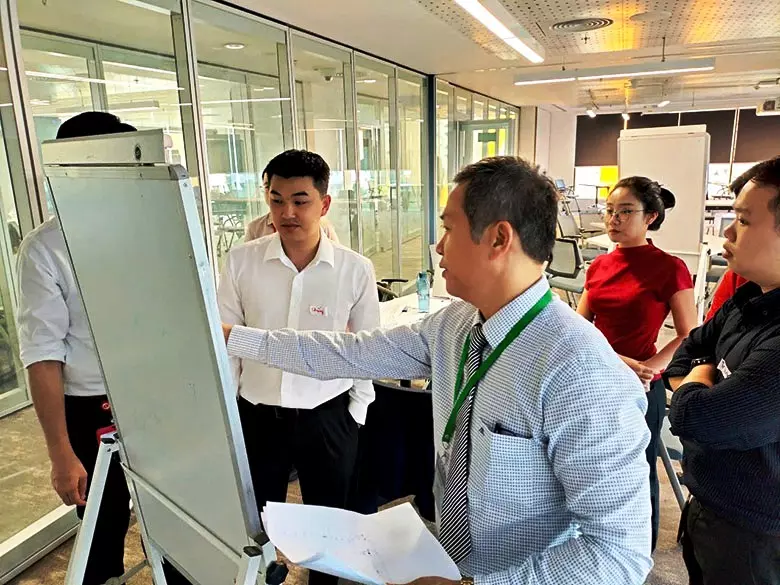
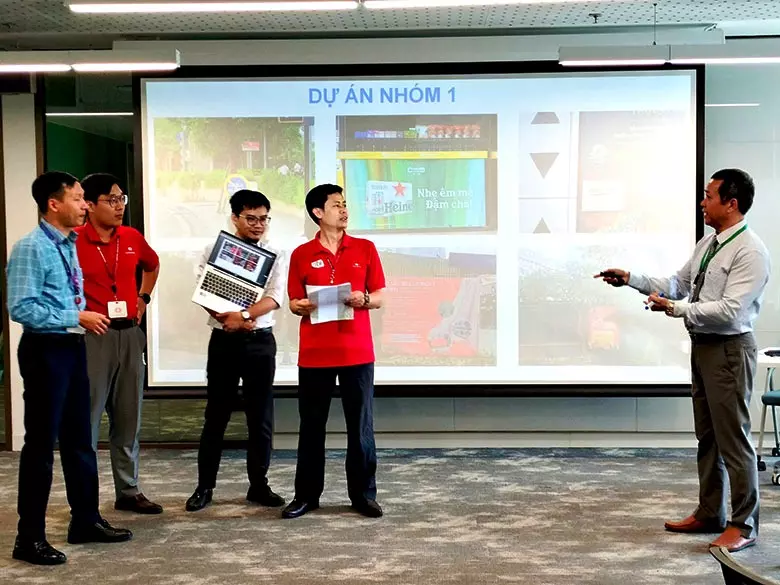
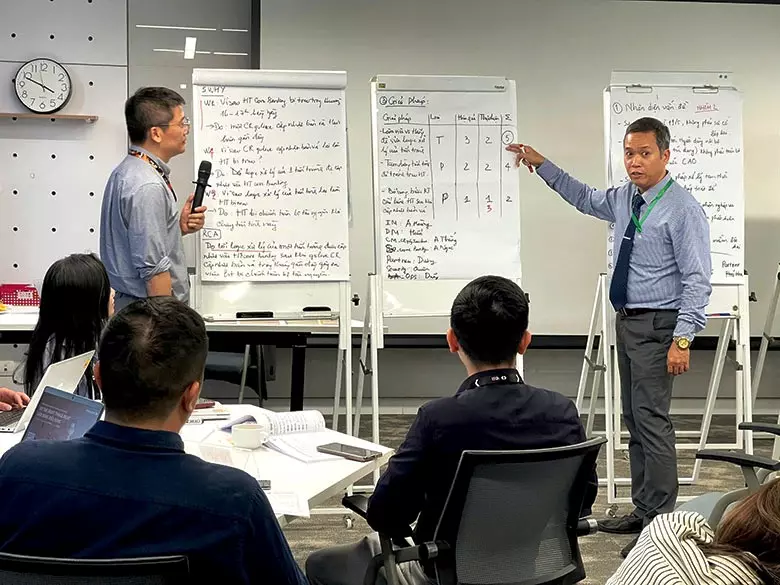
Business leaders discussing AI strategy with their team and a collaborative robot in a technology innovation lab

Chief AI Officer - CAIO

Leading AI Strategy and Implementation in the Enterprise – develop the leadership, governance, and implementation capabilities required to align AI with business objectives.

Course Contents

1Course Overview

As artificial intelligence (AI) increasingly becomes a core element of digital strategy and innovation, the role of the Chief AI Officer (CAIO) is becoming essential for modern organizations. A CAIO not only leads AI initiatives but also serves as a strategic bridge between technology and business objectives. With a strategic perspective, the CAIO helps organizations identify AI opportunities that deliver practical value, optimize operations, enhance customer experience, and create sustainable competitive advantage. The CAIO also plays a critical role in establishing transparent AI governance, ensuring ethical and legal compliance, and managing risks related to data and models. In an AI-first era, appointing a CAIO is no longer merely an option; it is increasingly a strategic requirement for sustainable growth and rapid adaptation in a volatile digital environment.

Infochief Academy’s “Chief AI Officer - CAIO” course helps learners understand the strategic role of the CAIO while developing capabilities to build AI roadmaps, govern data, assess risks, integrate AI into operations, and monitor the effectiveness of AI initiatives.

Duration10 days / 20 sessions
FormatPublic / In-house
LevelEnterprise AI Leadership
CertificationChief AI Officer - CAIO

2Learning Objectives

  1. Understand the role, capabilities, and responsibilities of a CAIO within an organization.
  2. Develop an AI strategy aligned with the organization’s business direction.
  3. Design an AI implementation roadmap from pilot initiatives to enterprise-wide scale.
  4. Evaluate and select appropriate AI technology solutions (GenAI, ML, NLP, etc.).
  5. Establish data governance and infrastructure to support AI implementation.
  6. Manage risk, ethics, and legal compliance in the use of AI.
  7. Establish an effective AI operating model (AI CoE, AI Taskforce, etc.).
  8. Measure the effectiveness and impact of AI initiatives using specific KPIs.
  9. Lead change and foster a data-driven culture and innovation across the organization.
  10. Collaborate effectively with business functions, technology partners, and AI experts.

3Target Participants

Board members and C-level executives (CEO, CIO, CTO, CDO, etc.)responsible for AI development direction.
Heads/directors of IT, Digital Transformation, and Data Analytics functions
Managers responsible for AI, Data, or Digital Innovation projects
Strategy, planning, and R&D professionalsseeking to strengthen enterprise AI capabilities.
Professionals responsible for AI operations, MLOps, or AI/GenAI platform deployment
Risk, compliance, and legal managerswith an interest in AI Governance.
Instructors and researchersapplying AI to real business contexts.
Founders, COOs, or middle managersin technology companies.
High-potential employeesin internal AI leadership succession and development programs.
Organizations implementing Digital Transformationthat need to build strategic AI capabilities.

4Course Content

01Part 1: The Strategic Role of the CAIO in the Enterprise
  • Define the strategic role of the CAIO within the organization
  • Compare the CAIO role with CTO, CIO, CDO, and CFO roles
  • Enterprise AI governance and operating models
  • CAIO authority and responsibilities using a RACI model
  • Business value map for AI initiatives
  • AI team competency and skills framework
  • AI function organizational structure and staffing model
  • AI reporting system and governance accountability
  • Assess organizational AI maturity
  • Benchmark AI governance capabilities against industry standards
  • Plan development and transition into the CAIO role
02Part 2: Analyzing AI Applications in the Enterprise
  • Translate business problems into AI use cases
  • Analyze AI application opportunities
  • Map business processes integrated with AI
  • Identify and describe AI Use Cases
  • Impact and feasibility scoring matrix
  • Prioritize Use Cases by value and risk
  • Estimate the business value generated by AI
  • Assess the risk and feasibility of each Use Case
  • Track Use Cases by business function
  • Build an AI opportunity map
  • Process from idea generation to Use Case implementation
  • Analyze stakeholder priorities
  • Benchmark AI Use Cases against industry standards
03Part 3: Designing AI Solutions for Business Functions
  • Gather business requirements for AI
  • Define functional and non-functional requirements
  • Design AI processing flows and data-flow diagrams
  • Assess input data readiness
  • Select the appropriate AI solution type (classification, prediction, etc.)
  • Design AI architecture aligned with the enterprise model
  • Plan the AI model lifecycle
  • Conduct cross-functional design review among Business – IT – AI teams
  • Assign design responsibilities across functions
  • Assess the feasibility of requirements for AI implementation
  • Design wireframes to illustrate the AI solution
  • Evaluate non-AI alternatives
  • Design the user journey within the AI solution
04Part 4: Planning AI Project Implementation
  • Plan phased implementation (POC → Scale)
  • Define KPIs, implementation milestones, and success criteria
  • Build an Agile backlog
  • Plan resource and budget allocation
  • Create a risk register and contingency plans
  • Checklist for evaluating POC-stage outcomes
  • Align expectations with stakeholders
  • Plan scaling after the POC stage
  • Project governance model from experimentation to production use
  • Communication plan during implementation
  • Enterprise-wide AI implementation risk map
05Part 5: Applying AI to Process Automation
  • Identify manual processes suitable for AI-enabled automation
  • Design AI and RPA integration
  • Automate the processing of documents, emails, forms, and invoices
  • Plan API integration with AI models
  • Exception-handling and manual-processing rules
  • Design automated approval workflows
  • Track operating costs after AI adoption
  • Compare process performance before and after AI implementation
  • Map business rules into the AI system
06Part 6: AI-Enabled Decision Support
  • Design AI dashboards for managers
  • Monitor sales forecasting and customer-behavior models
  • Generate AI-based market trend reports
  • Monitor real-time product recommendations
  • Plan AI-based price optimization and resource allocation
  • Present AI reports to executives
  • Measure AI’s impact on business decisions
  • Evaluate AI prediction confidence and probability
07Part 7: Managing Internal Communications During AI Implementation
  • Develop an internal AI communication plan
  • Analyze stakeholders and plan engagement activities
  • Assess organizational change readiness
  • Assess employee awareness and understanding of AI
  • Assess needs and develop role-based AI training programs
  • Capture feedback and manage resistance to change
  • Guidance for implementing an “AI Champion” program
  • AI success stories and FAQs
  • Evaluate the effectiveness of AI communications and training
08Part 8: AI Risk & Ethics Management
  • Register and track AI-related risks
  • Assess ethical impacts in alignment with ISO/IEC 42001
  • Manage transparency and traceability
  • Monitor input data quality
  • Validate model outputs before production use
  • AI ethics committee meeting minutes
  • Periodic AI model audit reports
  • Track AI incidents and feedback
  • Monitor prompts in GenAI systems
  • Evaluate GenAI vendors and policies
09Part 9: Evaluating AI Solution Effectiveness
  • Dashboard for tracking AI project KPIs
  • Accuracy log
  • Compare model performance with business outcomes
  • Calculate cost savings and AI ROI
  • Survey user satisfaction
  • Evaluate the effectiveness of each Use Case
  • Consolidated impact report after six months of implementation
10Part 10: AI Platform & Vendor Management
  • Document AI platform feature requirements
  • Decision matrix: Build vs. Buy
  • Compare vendors and score AI platforms
  • SLA agreement template for AI vendors
  • Dashboard for monitoring performance and SLAs
  • Security and legal compliance checklist
  • Security and data risk assessment form
  • Track KPIs and AI platform maintenance plans
  • Lifecycle management log for AI platforms and tools

5Training Methodology

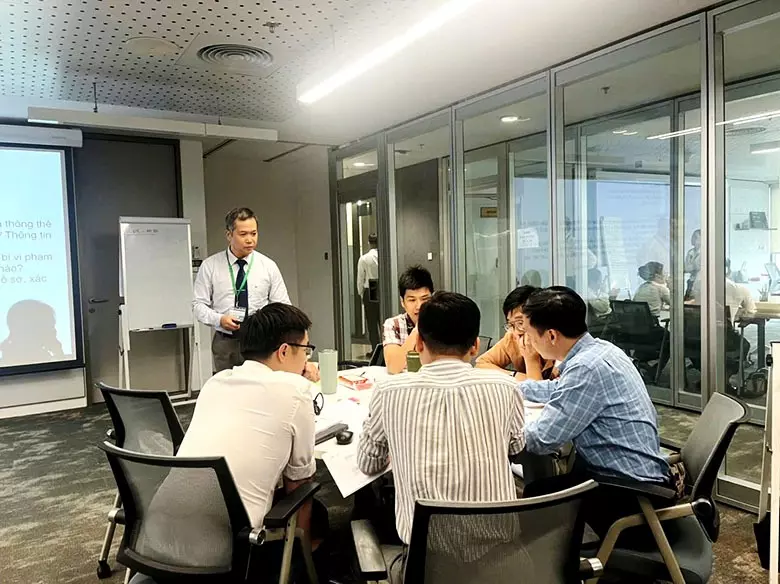
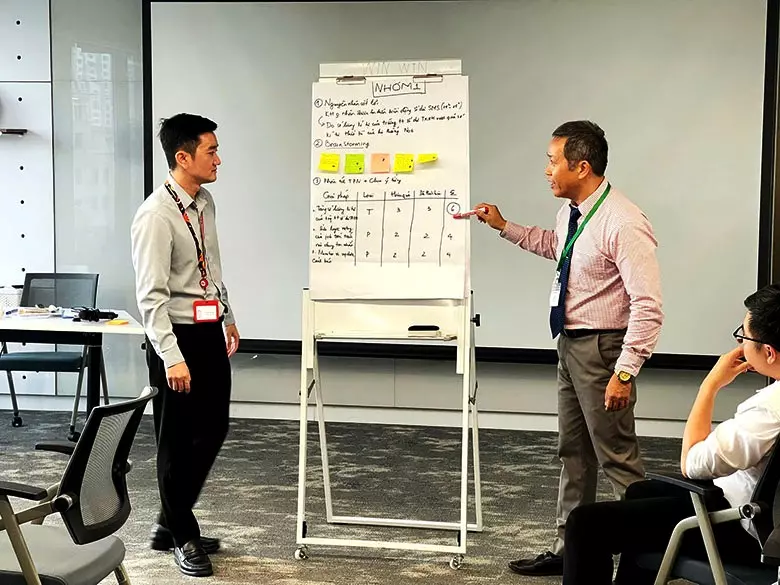
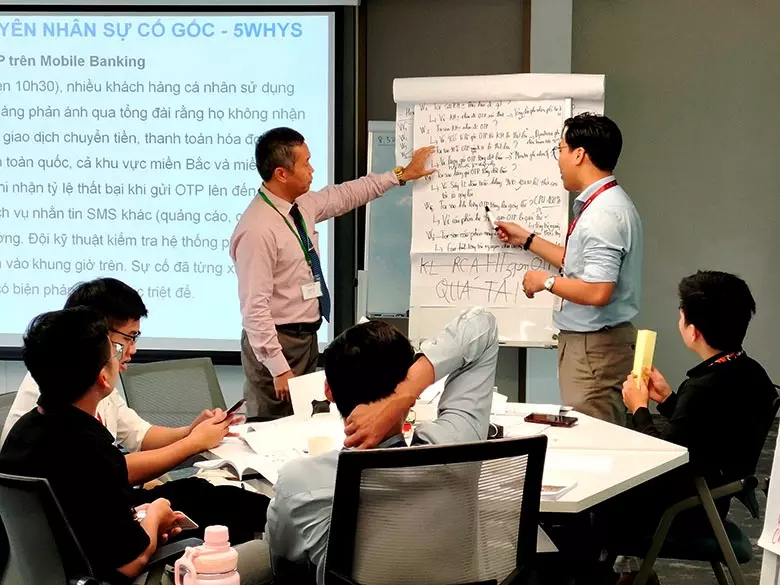
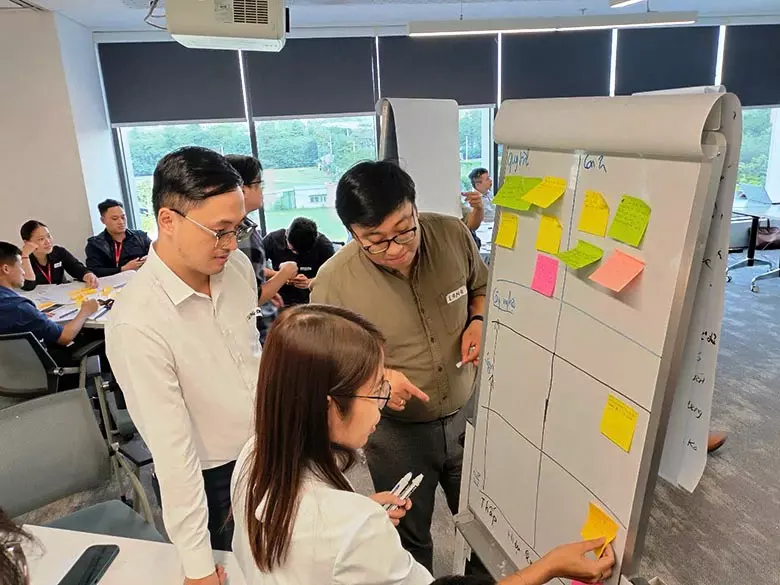
30% theory – 70% practice. Instructors present a concise knowledge framework, followed by discussions, case studies, self-assessments, scenario-based exercises, and action planning to strengthen practical application.

6Course Information & Enrollment

Public Course Schedule

Expected Start DateScheduleClass HoursLocationTuition FeeEarly-Bird FeeEnroll
--/--/----Saturday – Sunday08:30 – 16:30Ho Chi Minh City16.500.000 VND15.500.000 VNDEnroll
--/--/----Monday – Friday18:00 – 21:30Hanoi16.500.000 VND15.500.000 VNDEnroll
Note: The early-bird fee applies only when tuition is paid at least 15 days before the course start date. Learners may register to attend the first session on a trial basis; Infochief will confirm the official schedule with registered learners before the class is organized.
Total Training Duration: 10 days / 20 sessions.

In-house Training

DurationIn-house Training FeeClass Size
10 days / 20 sessionsVND 108,500,000 per classMaximum 35 learners per class.

Depending on the training location, instructor travel and accommodation expenses may be charged separately.

Program Completion: Learners must complete a final project to demonstrate their understanding of the course content and ability to apply it in a real organizational management context.

Request In-house Consultation →

7Learning Materials & Certification

Infochief Course Materials

Infochief’s standard course materials (Vietnamese), English-language reference materials, and sample practical exercises.

CAIO Templates & Toolkits

Forms, Checklists, Templates, Scorecards, Procedures, Flowcharts, Guidance, Samples, Rules, Policies, Questionnaires, Assessments, and Comparison Charts.

Explore the Toolkits →
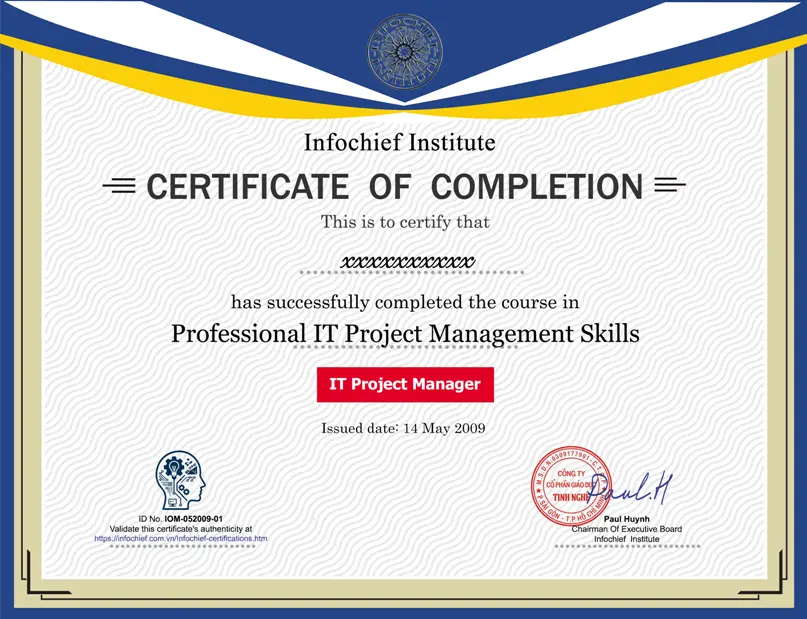
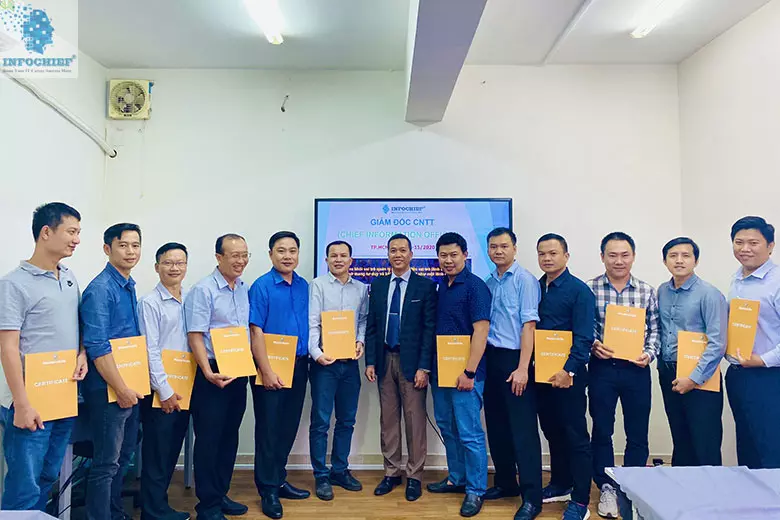
Sample Chief AI Officer - CAIO certificate from Infochief Academy

Chief AI Officer - CAIO

Learners who participate in and complete the course will receive a “Chief AI Officer - CAIO” certificate issued by Infochief Academy.

Certification Information →

8Learner Testimonials

Nguyễn Xuân Đại - Infochief Academy learner
Nguyễn Xuân ĐạiDeputy Director, IT Center · Thai Tuan Group

The program provided a clearer understanding of the IT leadership role: it requires not only technical knowledge, but also strong management capability and the ability to apply knowledge in practice.”

Lê Đức Huy - Infochief Academy learner
Lê Đức HuyIT Manager · Sacombank

The course helped me systematize my IT Management experience, clarify my career direction, and better understand how to organize IT in alignment with business growth.”

Lương Khánh - Infochief Academy learner
Lương KhánhIT Deputy Manager · OCB

The modules closely match the needs of IT managers; the discussion-based approach, real-world scenarios, and final project significantly strengthen practical application.”

Nguyễn Thanh Hiền - Infochief Academy learner
Nguyễn Thanh HiềnIT Manager · VNPT Long An

The program provides a comprehensive view of IT Management, from planning and implementation to evaluation and development of an organization’s IT investment roadmap.”

View More Learner Testimonials →

9Featured Clients