
Đỗ Ngọc MinhIT Manager · Hospital for Tropical Diseases
The course helps systematize existing knowledge and adds practical lessons that are useful for day-to-day IT management.”


Build capabilities to assess risk, define RTO/RPO, design recovery strategies, and develop a Disaster Recovery Plan that sustains IT operations during major disruptions.
Disaster Recovery Planning (DRP) is essential to protecting organizations against unexpected events such as natural disasters, system failures, and cyberattacks. An effective DRP supports business continuity, minimizes data and asset losses, and strengthens confidence among customers and partners. Preparing recovery scenarios in advance and defining clear response procedures helps organizations react quickly, build resilient recovery capabilities, reduce disruption, and limit financial losses.
Infochief Academy’s “Disaster Recovery Planning – DRP” course equips learners with the knowledge and skills to establish a comprehensive Disaster Recovery Plan, from risk assessment and recovery strategy development through implementation and effectiveness testing. Learners are guided in protecting data, maintaining system operations, limiting incident impact, and improving proactive response capabilities to support business continuity.
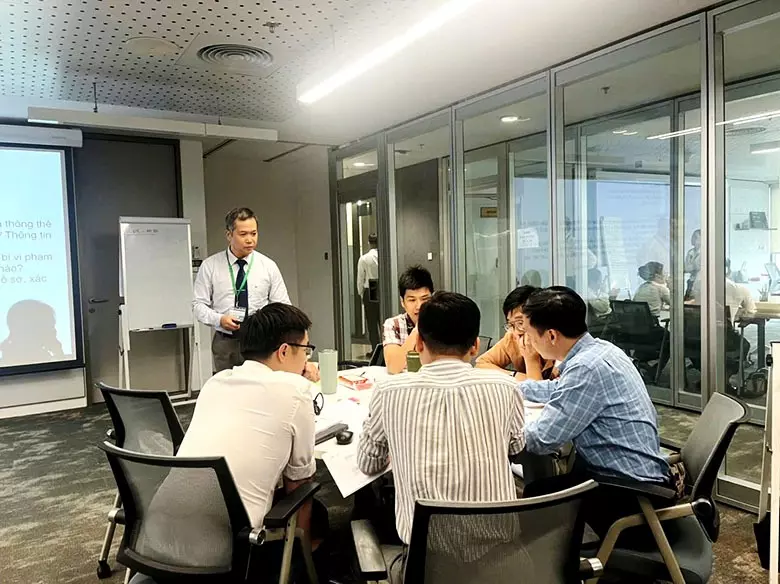
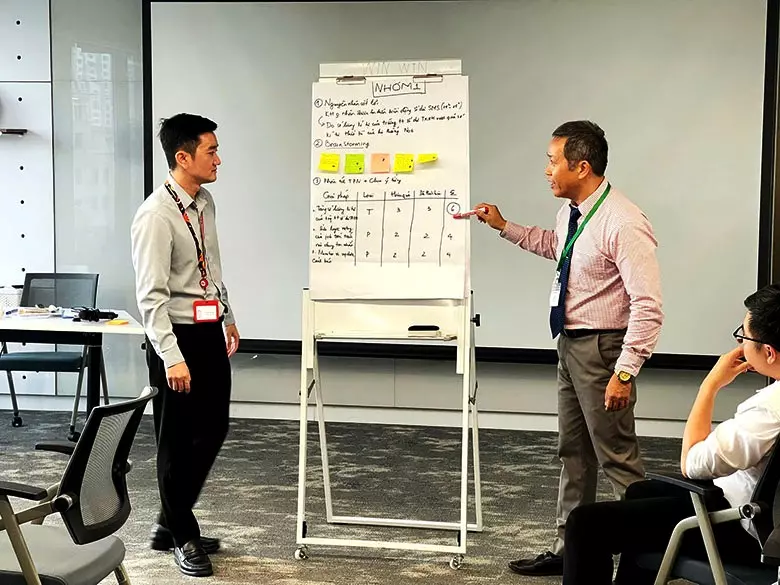
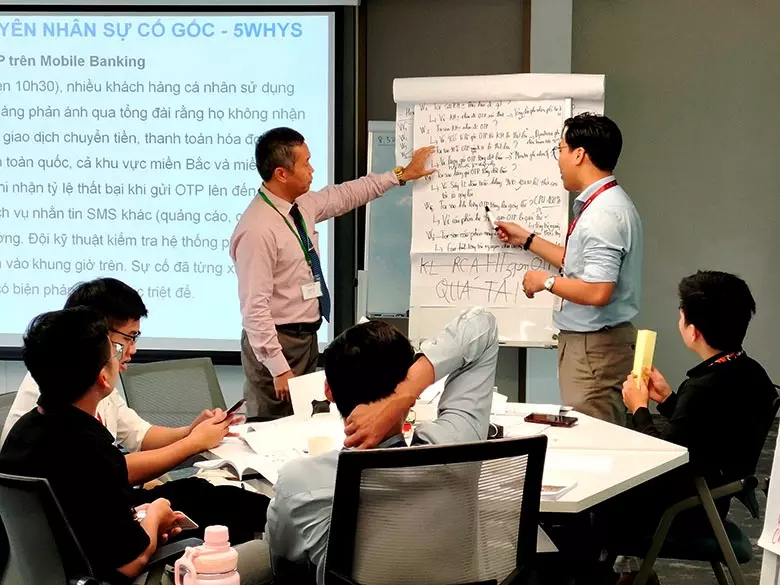
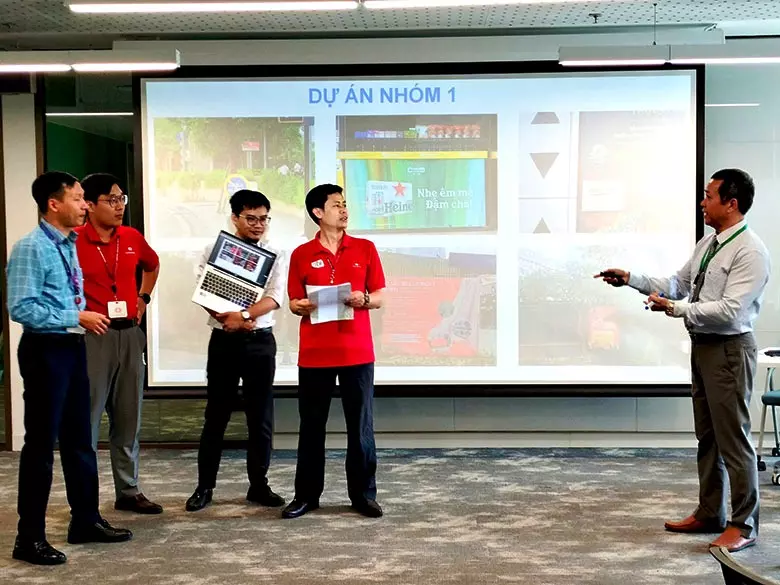
30% theory – 70% practice. The instructor presents the knowledge framework concisely, followed by discussions, case studies, self-assessments, scenario-based exercises, and action planning to strengthen workplace application.




| Duration | Class Size | Tuition Fee |
|---|---|---|
| 2 days / 4 sessions | Up to 35 learners/class | VND 48,500,000 / class conducted at the organization’s factory or office. |
Other costs (if applicable): Depending on the training location, the instructor’s travel and accommodation expenses may be charged separately.
Request In-house Consultation →Vietnamese course materials for each module, English reference materials, and sample practical exercises.
Forms, Checklists, Templates, Scorecards, Procedures, Flowcharts, Guidance, Samples, Rules, Policies, Questionnaires, Assessments, and Comparison Charts.
Explore the Toolkits →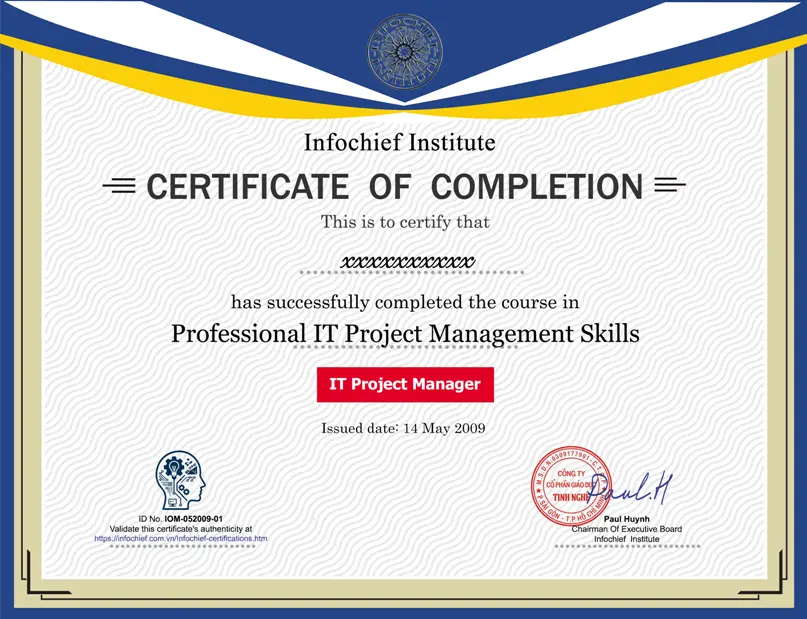
Learners who complete the program will receive a course completion certificate from Infochief Academy.
Certification Information →The course helps systematize existing knowledge and adds practical lessons that are useful for day-to-day IT management.”

The systematic management content, together with toolkits, processes, and templates, gives learners a stronger foundation for implementing IT plans professionally.”
The course materials combine international standards with the Vietnamese business context; the instructor’s experience and supporting toolkits help improve practical management effectiveness.”

The modules closely reflect the needs of IT managers; discussions, practical cases, and the final project strengthen workplace application.”
 Completion of the Information Security Management course at Axis Vietnam, Ho Chi Minh City.
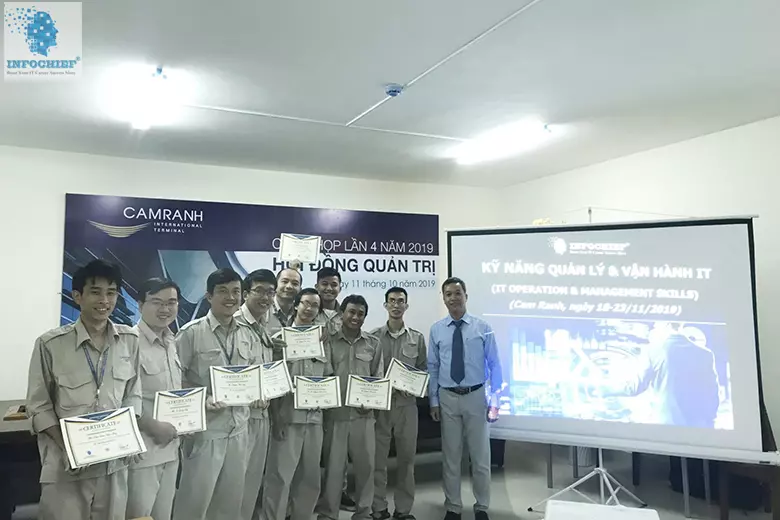 Completion ceremony for the IT Management and Operations course at Cam Ranh International Terminal Joint Stock Company, Cam Ranh City.
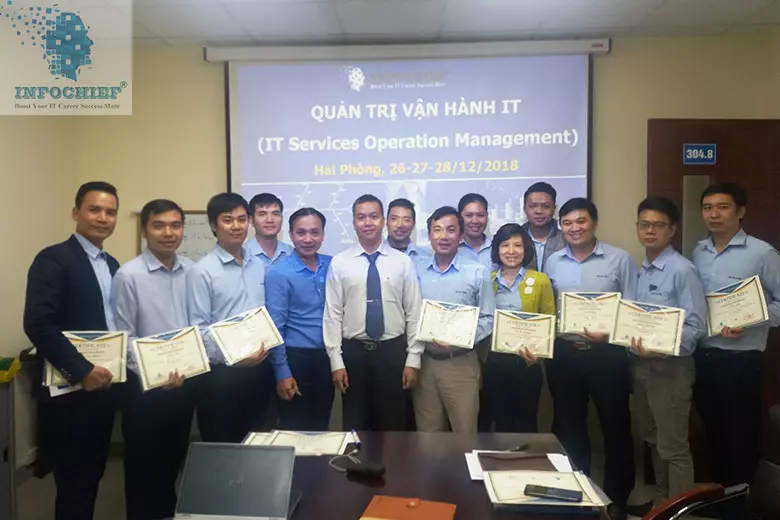 IT Operations Administration training for the IT Center of Hai Phong Port.
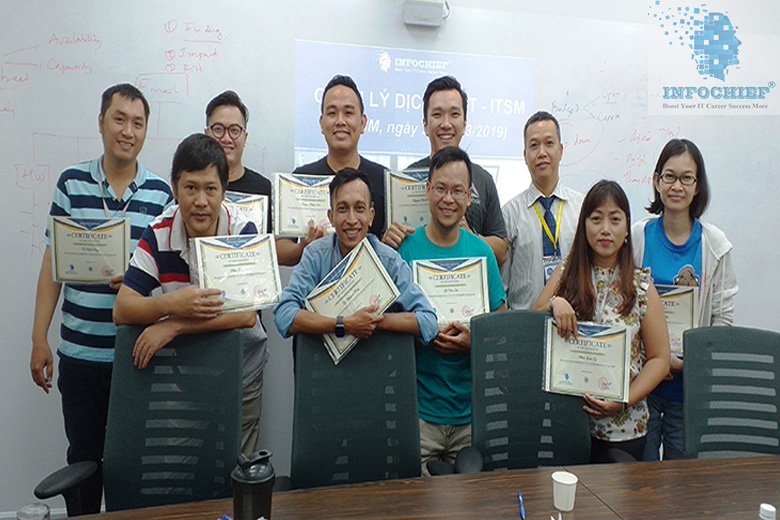 IT Service Management training for the IT Department of International School Ho Chi Minh City.
 Completion of the ITIL 4 Foundation course at BVIS International School, Hanoi.
 Completion of the Internal IT Audit course at MobiFone Corporation, Hanoi.