
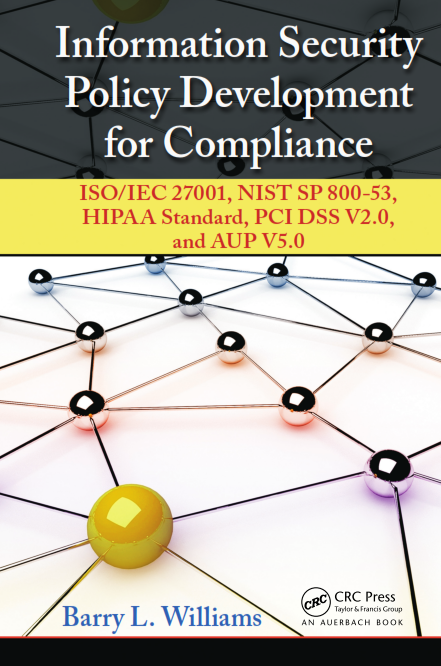
Information security policies are important because they convert regulatory, contractual, and control requirements into clear rules that people and systems can consistently follow. When multiple frameworks apply at the same time, organizations need a practical way to avoid duplicated policy work while still addressing each compliance obligation.
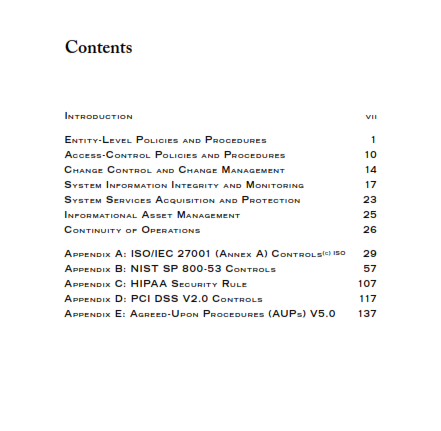
This publication explains how to develop policy statements that can support ISO/IEC 27001, NIST SP 800-53, HIPAA, PCI DSS, and acceptable use requirements. It covers entity level policies, access control, change management, information integrity and monitoring, system acquisition and protection, asset management, and continuity of operations.
For security and compliance professionals, the book provides a practical foundation for consolidating overlapping requirements, capturing management expectations, and documenting formal and informal security procedures in a more manageable policy framework.
Key publication and file information for this ebook.
| File |  pdf pdf |
|---|---|
| Pages | 152 |
| Language |  English English |
| Size | 2.9 MB |
| Book Code | E Book ISO27001-Compliance |
Preview selected pages from the Information Security Policy Development for Compliance ebook before purchasing.
Price: $15.00

Secure payment via PayPal. Digital ebook delivery follows successful payment.